Wednesday, March 23, 2011

Pmu Foals Auctions 2010

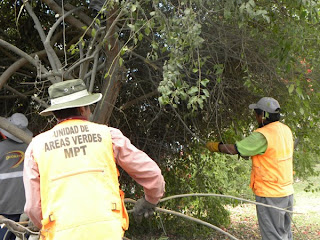
Parks and Gardens Maintenance is a benefit of a permanent

EXP. No. 01715-2010-PA/TC (Rationale 7)

AREQUIPA

DIONICIO CUSI KNEW
JUDGEMENT OF THE CONSTITUTIONAL COURT

In Lima, at 2 days of September 2010, the Second Chamber of Constitutional Court, composed of Judges Mesía Ramirez, Beaumont and Eto Callirgos Cruz, made the following statement

SUBJECT
constitutional tort
Appeal lodged by Mr. Dionicio Cusi knew against the decision of the First Civil Chamber of the Superior Court of Justice Arequipa, on pages 128, the date March 3, 2010, which declared unfounded the claim for protection here. BACKGROUND


On July 24, 2009, plaintiff brought the claim for protection against Socabaya District Municipality, requesting that it reinstate the workplace as a worker of Parks and Gardens Public Cleaning Ornato, having been the victim of a layoff uncaused. States that joined to work for located since January 2005, and did so until July 1, 2009, when he was arbitrarily dismissed from their jobs. He adds that efforts made permanent in nature, under subordination and subject to a work schedule, so that violate your constitutional rights and due process work.

The demand answers located stating that the applicant has carried out work uninterrupted, as it was temporarily hired as an assistant in the area of \u200b\u200bparks and gardens, since it has qualified workers in that area.

Prime Paucarpata Mixed Court, dated September 16, 2009, states established the suit, arguing that it has become a distortion of the employment contract.

The superior jurisdiction, revoking the appeal, said the claims unfounded, considering that in the case is evidence that the applicant was hired on a temporary basis. BASICS


Hometown demand
1. First, it is necessary to determine the labor to which the applicant was subject to determine the effects of competition in this Court to hear the dispute. In this regard, it should be noted that the allegations of the parties demonstrates that the appellant admitted to work for the Municipality located since the January 1, 2005, that is, when it was already amended Article 52 of Law No. 23,853 , which stated that municipal workers are subject to the labor of private activity.

2. According to the criteria procedurability under the demands of private individual working on the foundations established in 7 to 20 STC No. 0206-2005-PA/TC, which constitute binding precedent under the provisions of article Preliminary Title VII of the Code of the Constitutional Court considers that, in this case, it is appropriate to assess whether the applicant has been subject to arbitrary dismissal. Delimitation of the request


3. In this case, the appellant seeks to reinstate the worker in his job as Parks and Gardens Public Cleaning Ornato, considering that having done work of a permanent nature, has been the victim of a groundless dismissal. Analysis


controversy 4. Article 77, subsection d) of the TUO of Legislative Decree No. 728, Law of Productivity and Competitiveness Act, approved by Supreme Decree No. 003-97-TR states that contracts are subject to special conditions deemed maturity date if the contract worker demonstrates that his contract was based on the existence of simulation or fraud to labor standards, which takes place when the services activities required under a permanent nature, and to avoid compliance with labor regulations that require the hiring of an employee for an indefinite period, a situation in which the employer appears or pretends to observe the conditions required by law to sign contracts work subject to special conditions, whose main characteristic is the timing.

5. As can be seen working certificate (f. 7), los contratos de trabajo (f. 8 a 10) y las boletas de pago (f. 38 a 47) el demandante laboró para la emplazada como obrero a partir del 8 de setiembre de 2008 y cesó el 31 de diciembre de 2008, para ser nuevamente contratado desde el 7 de enero hasta el 30 de junio de 2009. Siendo ello así, se evidencia que el demandante no realizó labores ininterrumpidas hasta el año 2009, puesto que consintió su cese con fecha 31 de diciembre de 2008. Por tanto, sólo se procederá a analizar el último periodo laborado, esto es, del 7 de enero al 30 de junio de 2009.

6. De los medios probatorios, obrantes de fojas 8, 10 y 42 a 47 de autos, se advierte que el demandante suscribió dos contratos de trabajo specific duty to labor, from 7 January to 30 June 2009, a worker in the maintenance of parks and gardens, on a temporary and exceptional.

7. However, as has already had occasion to repeat it several times, this school considers the work of Assistant Parks Irrigation is a benefit of a permanent in time, as one of the main functions of municipalities. The role of maintenance and watering parks and gardens due to a continuing need in the regular exercise of the functions of municipalities, so it follows that the position of workers responsible for maintaining parks and gardens is of a permanent nature and not temporary .

8. Therefore, temporary work contracts concluded on the basis of these assumptions should be considered for an indefinite period, and any determination by the employer for the completion of the employment relationship could only be sustained by a just cause provided by law, of Otherwise, it would be an unfair dismissal, as in this case, which ban the substance guarantees the right to work, recognized by Article 22 ° of the Constitution.

For these reasons, the Constitutional Court with the authority under the Constitution of Peru

RESOLVED

1. Upheld the claim, and consequently, NULL groundless dismissal that the appellant has suffered.

2. Restore the situation prior to the violation of right to work, it is ordered that the District Municipality of Socabaya meet restoring the applicant to the same job or another of equal or similar level within 2 business days with the payment of the costs of the process. Published and notifíquese

.

SS. MESSIAH

RAMÍREZ

BEAUMONT Callirgos

ETO CRUZ

Tuesday, March 22, 2011

What Is The Biggest Number Ever Recorded

Municipal Public Cleaning Work under private sector status

EXP. No. 03017-2010-PA/TC (Fundamentals 1 and 3)
PIURA


SANDY AGUILAR PAUL

QUEZADA

JUDGEMENT OF THE CONSTITUTIONAL COURT


In Lima, on the 6th day of October 2010, the Second Chamber of the Constitutional Court, composed of Judges Vergara Gotelli, Alvarez Miranda Urviola Hani, made the following statement

SUBJECT
constitutional tort
Appeal lodged by Mr. Sandy Paul Aguilar Quezada against the decision issued by the Second Chamber in Civil Superior Court of Justice of Piura, on pages 89, the date July 12, 2010, which dismissed the claim for protection here. BACKGROUND


On December 18, 2009 the plaintiff brought claim for protection against the Provincial Municipality of Piura asking that it rescind the verbal dismissal has been, and therefore replace it in the same position and level, you cancel the not received salaries and providing for payment of costs. States that provided work for the entity in question permanently and continuously from 16 June to 16 November 2009, when he was fired without cause. The proposed

located except for lack of exhaustion of administrative review, and answer the complaint stating that there was no breach any rights of the applicant and there is a specific procedural avenue and suitable for ventilating the claim that is contentious - administrative.

Third Special Civil Court of Piura, dated April 13, 2010, states founded on the grounds that demand has determined the employment status of the services provided by the actor, taking into account the principle of the primacy of reality.

The Second Civil Chamber of Piura in revoking the appeal, declared inadmissible the application because it considered that to discuss more fully the constitutional rights alleged by the plaintiff requires the administration of evidence in accordance with the provisions paragraph 2) of Article 5 of the Constitutional Procedural Code.

Hometown
BASICS

demand
1. First, it is necessary to determine the labor to which the applicant had been subject to clarify the jurisdiction of this Court to hear the dispute. At present about this shows that the appellant admitted to provide services to located the June 16, 2009, that is, when it was in force Article 37 of Law No. 27972, which states that municipal workers are subject to the labor of private activity.

2. On the other hand the determination that the applicant had been subjected to the labor of the private sector, since it alleges to have served as municipal workers, and taking into account the criteria procedurability of claims relating to labor under private individual, set in the grounds 7 to 20 STC No. 0206-2005-PA/TC, which constitute binding precedent under the provisions of Article VII of the Preliminary Title of the Code of the Constitution, in this case is to assess whether the applicant has been a victim of unfair dismissal. Delimitation of the request


3. The purpose of the application is for an order directing the Provincial Municipality of Piura to reinstate the applicant in the position he occupied as a laborer in the field of public cleanliness, he cancel not received wages and providing for payment of costs on the grounds that it infringed his constitutional right to work. Analysis


controversy 4. This dispute centers on whether the provision of recurring services performed can be considered as a contract of indefinite duration, in order to apply the principle of the primacy of reality, then verified that there was a relationship in nature work, the applicant could only be fired for just cause related to his conduct or work capacity.

5. Article 4 of Supreme Decree No. 003-97-TR states that "In all personal services paid services and subordinates, it is presumed the existence of an employment contract for an indefinite period. "

6. On the other hand it should be noted that any employment relationship or contract of employment is set to attend and there is proof of three essential elements: (1) personal delivery by the employee, (2) compensation and (3) the subordination to the employer.

7. In relation to the principle of the primacy of reality it has been clarified in the STC No. 1944-2002-AA/TC, that "(...) in the event of discrepancies between what happens in practice and what flows from documents, should be preferred to the former; ie what happens in the realm of facts "(principle 3).

8. It should be noted that the claims located in the defense of the claim that the complainant was hired through the special arrangements CAS, however in page 30 of Court records, Report No. 004-2010-ESC-UPT-OPER/MPP of dated January 7, 2010, issued by the Technical Office Roster Staff Technical Processes Unit of the Provincial Municipality of Piura, through which indicated that the review of the database of the Integrated Municipal Management - Human Resources module verifies that the applicant is not registered as a worker located and does not belong to any labor system public, private or special arrangements, but with payment vouchers issued by the Integrated Financial Management System of the Provincial Municipality of Piura, the same act on pages 4 to 8 cars, is certifying that the actor was paid for services by third parties and not by the so-called administrative service contracts.

9. Also proof of payment procedure on pages 4 to 8 confirmed that the applicant provided services by third parties as public sanitation worker in the activity of "Improving Public Service Cleaning the city of Piura," and he held an employment relationship Uninterrupted demand from the June 16, 2009 until November 16, 2009 in exchange for payment (S /. 550.00), an amount that is repaid when complying with a schedule of eight hours and is subject to subordination.

10. Similarly it should be noted that uniform jurisprudential approach of the Court (STC 04983-2009, PA, 01891-2009, PA, 00466-2009 STC-PA, STC, PA 05958-2008, STC, PA 04481-2008, among other ) consider that "(...) public cleaning work is a benefit of a permanent in time, as one of the main functions of municipalities."

11. Therefore, the third party service provided by the applicant to the Provincial Municipality of Piura, on Based on these assumptions, should be considered for an indefinite period, and any determination by the employer for the completion of the employment relationship could only be sustained by a just cause provided by law, otherwise it would be an unfair dismissal, as in this case, which ban the substance guarantees the right to work, recognized by Articles 22 and 27 º of the Constitution, so it must estimate the demand.

12. Regarding the request for payment of wages not received, it should be noted that these, having nature for damages, not restitution, are not covered by economic under process.

13. Regarding the payment of costs of the process, having violated the right to work the claimant in accordance with Article 56. No Constitutional Procedural Code, it is ordered that the notice to bear the court costs, which must be settled on the stage implementation of this decision.

For these reasons, the Constitutional Court with the authority under the Constitution of Peru


RESOLVED 1. Upheld the request for defense for having established the infringement of the right to work and consequently the act of dismissal NULL uncaused provisions detrimental to the plaintiff.

2. Direct the Provincial Municipality of Piura to replace Sandy Don Paul Aguilar Quezada in the position he held before his departure, or one in the same category with the payment of the costs of the process.

3. To declare the end of the application which requested the payment of wages not received. Published and notifíquese

.

SS. Gotelli VERGARA


ALVAREZ MIRANDA

URVIOLA HANI

Monday, March 21, 2011

1970s Male Stubbie Shorts For Sale

Entities must pay overtime State Time Limits

EXP. No. 05924-2009-PA/TC (Basic 3 and 4) and CAS 623-2003 PIURA


LIMA MUNICIPAL HOUSING SAVINGS AND CREDIT MAYNAS


JUDGEMENT OF THE CONSTITUTIONAL COURT


In Lima, the 4 th day of October 2010, the Plenum of Constitutional Court, composed of judges Mesía Ramirez, Beaumont Callirgos, Gotelli Vergara, Calle Hayen, Eto Cruz and Alvarez Miranda , made the following statement


Appeal Case
constitutional tort brought by the Caja Municipal de Ahorro y Credito Maynas, through its representative, against the decision dated June 17, 2009, issued by the Constitutional Law Division Permanent Social and Supreme Court of the Republic, confirming the appeal, declared unfounded the action cars.


BACKGROUND On August 23, 2007 the plaintiff brought claim for protection against the vocal members of the JCC Board of Loreto, Mr. Carlos Amoretti Martínez, María Esther Chirinos Maruri and Mercedes Centeno couple, seeking rescission of any resolution dated April 30, 2007 which dismissed his claim under administrative and back to deliver verdict on appeal. Contends that trial began on administrative dispute resolution against the Regional Directorate of Labour and Employment to rescind that Executive Resolution No. 01-15-12-117-2004-DPSC-iqu, which fined S /. Soles 12,800.00 for breach of labor standards (overtime); process in which-as-respect has been violated his right to due process whenever the defendant Board, to issue ruling, upheld the validity of the fine without observing the official who imposed an inspector was not working (had usurped function), and infringed Article 12.4 of Law No. 27879 of the Budget Act of 2003 and Directive No. 004-2003-EF/76.01 that established the prohibition of payment for the performance of overtime.

The Public Prosecutor in charge of the affairs of the Judiciary answer the complaint, arguing that what is intended by the appellant is improper review of the merits of a case already decided in compliance with the procedural protection effective in accordance with the substantive and procedural rules of the art.

The JCC Board of Loreto, with a resolution dated October 10, 2008, declared unfounded the claim on the grounds that the inspection visit was credited with the judicial process underlying workers who worked outside the schedule, ie work overtime and that the fine is imposed according to law.


For its part, the Board of Constitutional Law and Social Standing Supreme Court of the Republic, with a resolution dated June 17, 2009, confirms the appeal on the grounds has not been able to establish that the court decision is a matter of claim clearly violates the constitutional rights invoked by the appellant. BASICS

Delimitation of the request


1. The object of the claim is that any repeal the resolution dated April 30, 2007 that dismissed the lawsuit filed by administrative law and become the appellant to deliver verdict on appeal. That exposed the claims, the Constitutional Court considers necessary to determine, in light of the facts stated in the application and the collections held by it, if it has violated the due process rights of the appellant to have ratified the validity of the fine imposed without official noted that the sentencing was not a labor inspector and apply Article 12.4 of Law No. 27879 of the Budget Act of 2003 and Directive No. 004-2003-EF/76.01 which prohibit the payment for overtime.

Case Analysis constitutional controversy regarding

2. The Constitutional Court has ruled that paragraph 3) of Article 139 of the Constitution of Peru establishes, as a principle of the judicial function, the observance of due process and judicial protection, an approach that not only limited to the formalities of judicial proceedings, but extends to the procedures administrative sanctions. Indeed, due process is conceived as the fulfillment of all warranties, conditions and rules of public policy to be observed in the procedural stages of all proceedings, including administrative, so that people are able to adequately defend their rights against any State action that could affect them. That is, any act or omission of State bodies in a process, whether administrative-punitive (...) or court must respect the due process of law. (Cf. STC No. 0858-2001-AA/TC, foundation 1a).

3. On this particular car Chartered believes that there is no apparent violation of any constitutional right of the appellant, since if it is true that the budget law at that time (2003) prohibited the State agencies to authorize the payment of overtime, it is not true also that through the inspection visit was proven irrefutably that the appellant's failure to pay overtime to their workers (folios 69-75 of the first book), a situation that led to the labor authorities will impose fines for failure job duties (overtime). Importantly, demand for cars seeks to challenge the imposition of a fine by the administrative authority based work failure to comply with labor regulations, however this question is based on the existence of a budget rule (prohibition of overtime), supporting that it is to say the least incongruous and illogical since both events (the imposition of the fine and ban overtime pay) are independent of each other and bear no connectedness whatsoever. It is a duty to point out here that the imposition of the fine for breaching labor standards.

4. Furthermore it is abundantly clear to understand that the prohibition of authorizing the payment of overtime is subjective scope of the public body (the appellant), but not workers of it, being so belonged to the appellant as do the leading employer in order to give full effect to the budget rule (for example, monitor the departure time of their workers and thus prevent any overtime .) But this was not done, constituting the negligence of the appellant made to allow work outside working hours.

5. On the other hand, with respect to the other argument made by the appellant, namely that the official who imposed the fine was not a labor inspector and therefore would have usurped function, this school believes that the protection against judicial decisions can not serve rethink a dispute resolved by the ordinary courts (the jurisdiction of the officer imposing the fine), it is not a means of challenge to continue to review a decision that is within the exclusive competence of the ordinary jurisdiction, venue where confirmed and / or ratified the validity of the imposition of the fine, as shown on pages 64-68 of the first book.

For these reasons, the Constitutional Court with the authority under the Constitution of Peru

RESOLVED

declare the petition for protection in the absence of proven infringement of the right to due process.

published and notifíquese.

SS. MESSIAH

RAMÍREZ

BEAUMONT Callirgos

VERGARA Gotelli

Hayen

ETO STREET CROSS

overtime (overtime): inalienable right under the Constitution:

"That in addition , the real and true is that the claimant worked days beyond the absence of legal and constitutionally free labor, of course the claim of the plaintiff should be protected in response to "the inalienability of the rights recognized by the Constitution and the law" ( second paragraph of Article twenty-six of the Constitution of the State). "

CAS.

No. 623-2003 PIURA.
Social Benefits Repayment
.

(El Peruano: 01/08/2005)


Lima, February 25 two thousand five.


TRANSIENT ROOM CONSTITUTIONAL LAW AND SOCIAL JUSTICE SUPREME COURT OF THE REPUBLIC.

SEEN: The leading cause dash six hundred twenty-three two thousand and three, as explained in the Tax Opinion, in Hearing Public date, and produced the vote in accordance with Law, issued the following statement.

MATTER OF THE APPEAL: This is an appeal by the applicant, folio letter of noventicuatro, against the Judgement of view ochentiocho folio dated 12 February, two thousand three, issued by the Second Civil Chamber of the Superior Court of Justice of Piura, which confirms the appeal of folio sixty dated November 4, two thousand two, which states no cause for action.

GROUNDS OF APPEAL: That, by resolution dated June 1, two thousand four, who work in the twentieth folio booklet stated from the appeal on the grounds of Disapplication of article nine of the legislative decree number eight cincuenticuatro.

WHEREAS

First: That the applicant submits that his case should have applied the ninth article of Legislative Decree cincuenticuatro number eight, to order the payment of overtime and reimbursement for the benefits side, since the judgments of merit is explicitly recognized that the actor performed overtime work; therefore the basis in which the ruling is based, to deny your payment in the sense that the defendant is a public entity and therefore the entity governing rules for each fiscal year budget which must be attached to both the entity subordinates "infringing articles twenty-five and twenty-six of the Constitution of the State.

Second: That, is a fact beyond dispute that the instances of merit have explicitly recognized that the actor performed overtime work, as well noted in the third recital of the sentence confirmed by the superior, "... that although from the year 1900 noventisiete to two thousand and one proves that you worked at the number indicated in the report revisory .. "(sic).

Third: That the appeal as the appeal based its decision not to defend the claim on the fact that as the Proyecto Especial Chira Piura a public sector entity and structurally dependent on the Ministry of Housing, Construction and Sanitation is subject to compliance standards and budget justification of the Republic, where the rules of austerity prohibiting the payment of overtime.

Fourth: to resolve fairly this point, you should keep in mind the scope of the latter part of Article twenty-three of the current Constitution, which states that "No one is forced to work without pay or without his free consent "therefore, the foundations of the appeal at this point are not only unreasonable and excessive, but to accept its relevance and validity would protect the exercise of abuse of rights by the state, because even though these standards are austerity, located not have allowed the appellant working outside normal working hours to eight hours for almost five consecutive years, inferring instead that the defendant had agreed to it.

Fifth: That in addition, the real and true is that the claimant worked hours beyond the legal and constitutional in the absence of free labor, of course the plaintiff's claim should be covered in response to "the inalienability of the rights recognized by the Constitution and the law "(paragraph two of Article twenty-six of the Constitution of the State).

Sixth: That, when the ninth article of the legislative decree number eight cincuenticuatro notes that the work is voluntary only states that, in principle, no one can be required to perform extra work without your prior consent, except where litigants that the law provides.

Seventh: That, it must invoke the application, ordering the payment of overtime at the number provided in the expert report on pages eighties, with a surcharge of five per cent of regular pay, as stated in article ten of Legislative Decree mentioned, on execution by determining the amount for their impact on the social demands in the demand for the period between 1900 noventisiete to two thousand one.

RESOLUTION: upheld the appeal by Mr. Victor Manuel Almestica Soto, noventicuatro folio, and consequently MARRIED Case ochentiocho folio view, date 12 February, two thousand three, and Acting Headquarters appealed Court revoked the date four November two thousand and two current folio sixty, declaring unfounded demand, to reform the declared founded, order the publication of this resolution in the official gazette El Peruano, for establish this precedent of mandatory compliance in the manner and form under the Act, in the row with Chira-Piura Special Project on Reimbursement of overtime and others, and returned.

SS. WALDE JAUREGUI; VILLACORTA RAMIREZ; DONGO ORTEGA; ACEVEDO MENA; STAR BED
Terms

Friday, March 18, 2011

Marlin Model 80 Scope

Labour Process, Administrative and Constitutional Process Guard Work

Labour Process, Administrative and Constitutional

Wednesday, March 9, 2011

Melina Velba Images Bulletin Board

Serenazgo Citizen and correspond to work as a laborer, Exp N ° 03334-2010-PA/TC, Case Pigs Sosa

EXP. No. 03334-2010-PA/TC (basis 2)

PIURA Juan Carlos Giron


SOSA OF THE CONSTITUTIONAL COURT JUDGEMENT


In Lima, on the 20th day of October 2010, the First Chamber of the Constitutional Court, composed of Judges Callirgos Beaumont, Eto Cross and Urviola Hani utters the following sentence


Appeal Case
constitutional grievance filed by Juan Carlos Girón Sosa against the decision issued by the First Civil Chamber of the Superior Court of Justice of Piura, on pages 93, the date June 4, 2010, which dismissed the petition for relief.


BACKGROUND On December 10, 2009, plaintiff brought the claim for protection against the Provincial Municipality of Piura, asking that it rescind the dismissal order was arbitrary and that, consequently, to order his reinstatement in the position he had held prior to the end, with the payment of wages not received and court costs. He reports that he served as a chauffeur in the Management of Municipal Public Security and Control, from the May 16, 2009 until November 30, 2009, through third-party service contracts, which contracts were indeed working, then worked under subordination and dependency with a monthly stipend.

The demand answers located on the grounds that the appropriate procedural route to resolve the dispute is the process administrative litigation, since the actor was the service provider (third-party service contract) for any short-term work. It also refers to the provision of services of the actor was in two periods in which there is no continuity, considering that in the last of which he served for two months and 25 days, ie has not established that it worked the second half of July in accordance with the payment vouchers submitted by the applicant himself.

The Second Civil Court of Piura, dated March 31, 2010, hereby established, in part, the request for defense, considering that the applicant state that it had worked steadily from June to November 15, 2009, exceeding the trial period under subordination and dependency, as the work of Driver is permanent in nature, and with a set schedule of work, work for which he received remuneration and which was supervised by a chief.

The superior authority to revoke the appeal and declared inadmissible, considering that the work done by the actor corresponding to an employee, so it belongs to the labor of public activity. BASICS


1. Based on the criteria procedurability of demands relating to labor under private individual established in the grounds 7 to 20 0206-2005-PA/TC STC, which are binding precedent in accordance with the provisions of Article VII of the Preliminary Title of the Code of the Constitution, in this case is appropriate to provide verification of alleged unfair dismissal by the plaintiff.


2. In the payslip on pages 9 that the actor has joined the Provincial Municipality of Piura on 15 May 2009, ie during the term of Article 37 of Law 27972, which states that municipal workers are subject to the regime private sector labor, to discharge the Public Safety Driver in the Management of Public Safety and Municipal Control. In this regard consistently held this school has stated that the work Guard Citizen Serenazgo correspond to the work carried out by a worker (STC No. 2237-2008-PA/TC, 6298-2007-PA/TC, among others).


3. Regarding the allegations of the set in the sense that the actor would have served for periods interrupted in payslips on pages 5-9, is not the ballot on the second half of July and the first half of August 2009, however, on pages 12 play the role of van services in August 2009, the afternoon shift, which includes the name of the actor. Also, the actor has made the list of personnel for services by third parties in the years 2008 and 2009, which established that he served in July and August 2009 (f. 88-90), which proves that he served from 16 May to 30 November 2009 without interruption.


4. The appellant seeks to be reinstated in his position of Driver Safety, paid work through civil contracts. Therefore, the controversy is whether these contracts were denatured and converted into employment contracts an indefinite period under the principle of the primacy of reality, in which case the actor could only be fired for cause relating to your conduct or earning capacity.


5. Article 4 of Supreme Decree 003-97-TR states that "all personal services in paid services and subordinates, it is presumed the existence of an employment contract for an indefinite period. " The case law of this school states that an employment relationship or contract of employment is set to attend and there is proof of three essential elements: (i) personal delivery by the worker, (ii) pay and (iii) subordination to the employer, the latter being the determining factor, and distinguishing characteristic of the employment contract against the lease of services.


6. In this regard, work orders and service role shifts, serenazgo and truck drivers in the second half of May June, August and November 2009, which contains the name of actor (ff. 10-13). Also, on pages 14 and 15 held in the name of the actor vouchers, stamped and signed by the Head of the Office of Maintenance, which describes the task Patrol in Piura.


7. Therefore, applying the principle of the primacy of reality, the actor served under subordination and dependence of the summoned, so his contract should be regarded as indefinite. Thus, having dismissed the plaintiff without express cause whatsoever arising from his conduct or capacity to work to justify it, have violated their constitutional rights to work, to due process and to adequate protection against arbitrary dismissal, as in merit order of the amparo proceedings for recovery, it should be the reinstatement of the plaintiff in the position he occupied.


8. To the extent that, in this case, it is proved that the municipality located violated the constitutional rights mentioned, corresponds, in accordance with Article 56 of the Code of the Constitution, to bear the court costs, which must be settled at this stage execution of sentence. Regarding the request for recovery of wages not received, in response to the restorative nature of the amparo proceedings, that point should be rejected.


For these reasons, the Constitutional Court with the authority under the Constitution of Peru,


RESOLVED 1. FOUNDED declaring, in part, the demand having been accredited under a breach of employment rights, due process and adequate protection against arbitrary dismissal.

2. ORDERED that the Provincial Municipality of Piura meets replace Don Juan Carlos Girón Sosa in office he occupied, or other similar level or hierarchy, and to pay the costs of the process.

3. Dismiss the request at the end referred to the recovery of wages not received.


published and notifíquese.

SS. BEAUMONT

Callirgos

ETO CRUZ

URVIOLA HANI

How Do You Try Out For Mls Soccer

In private sector status is not required the exhaustion of the previous - Case Llamosas

EXP. No. 02833-2006-PA/TC (Background 10.b) LIMA


MILD SIDANELIA


TIE CALL OF THE CONSTITUTIONAL COURT JUDGEMENT


In Lima, on the 28th day of November 2007, the First Chamber of the Constitutional Court, composed of Judges Landa Arroyo, Beaumont and Eto Callirgos Cruz, made the following statement


Appeal Case
constitutional tort brought by Mrs. Milder Lazo Llamosas Sidanelia against the decision of the Fourth Civil Division of the Superior Court of Lima, on pages 213, date November 30, 2005, declaring unfounded claim here.


BACKGROUND On September 3, 2003, plaintiff brought the claim for protection against the National Intelligence Council (CNI), seeking to declare Article 34 inapplicable. º. 38 of Supreme Decree N º 003 -97-TR, and that, consequently, to order his reinstatement in the position he occupied, with the payment of wages not received and statutory interest, and brought criminal charges against the aggressor. The Charter states that No. 059-2003-OGPPA-INF dated March 28, 2003, have violated their rights to work, defense and due process because he was told the term of their employment without being has expressed a valid reason.

The Public Prosecutor in charge of judicial affairs of the Presidency of the Council of Ministers proposes the exception of the arbitration agreement and answer the complaint alleging that the plaintiff has failed to exhaust administrative appeals and the process for defense, lacking probation station is not the appropriate way to elucidate the defendant claims.

Fifth Special Civil Court of Lima, dated March 31, 2005, declared unfounded the objection raised and unfounded claim, arguing that the decision to terminate summoned the employment of the applicant is under the law and that in any case, must assert its right in ordinary work.

The appeal upholds the appeal, believing that having completed the term of the last contract of the applicant, the termination of their work occurred automatically. BASICS


§. Delimitation of the dispute

1. The question that arises in this process under focuses on whether the Letter No. 059-2003-OGPPA-CNI, dated March 28, 2003, which communicates to the applicant the term of his employment without cause, has violated the rights to work, defense and due process.

2. Before going in-depth analysis, should be a response to the allegation made by the Public Prosecutor on the inadmissibility of the claim for failure to exhaust properly the applicant prior jurisdiction. In this case, to determine if properly drained prior jurisdiction, in principle, should be established whether the exhaustion of the previous results due


3. This is due to the exhaustion of the previous budget is a process inherent to judicial protection, which has been highlighted by this Court in STC 0485-2002-AA/TC as "a condition of the action required to be obtained a decision on the merits of the Constitution." Hence

paragraph 4) of section 5. No Constitutional Procedural Code (CPConst.) provides that no constitutional processes come when "[n] o prior remedies have been exhausted, except as provided by this Code and habeas corpus. "


4. It is also important to determine whether or not due the exhaustion of the stage, for purposes of computing the limitation period for filing the claim, and that paragraph 6) of Article 44. º of CPConst. provides that the deadline for filing the petition for relief "shall start after the period prior jurisdiction, when it appropriate." And because paragraph 10) of Article 5. º of CPConst. establishes that no constitutional processes come when "[h] to the deadline for filing the claim, with the exception of habeas corpus."

§. The exhaustion of the previous

5. On the purpose of the exhaustion of the previous, it should be noted that this Court in STC 0895-2001-AA/TC, referring to the exhaustion of administrative review, which also applies to prior remedies, determined that "[l ] he requirement administratively exhausted before turning to the constitutional protection is based on the need to give the administration a chance to review their own actions, in order to enable the run, before going to the court based, in this way can solve , if any, injury to their rights and legitimate interests. "

6. And is that the requirement of prior exhaustion of the aims to preserve the subsidiary character of the process of protection, preventing access to this constitutional jurisdiction occur without the opportunity for Public Administration to rule and, ultimately, to remedy the injury then invoked in the process for protection, because according to Article 38. of the Constitution has a duty "to respect, enforce and defend the Constitution."

7. Despite its obligation, there are certain circumstances that can make the exhaustion of administrative evil or a requirement in a ritual useless, particularly when the allocation of fundamental rights in question. In such cases, releasing the managed to fulfill this obligation. The variables, in limited sense, those exceptions are contained in Article 46. No. CPConst.

8. On the other hand, it should be noted that in the case of attacks attributed to the entities that Public Administration, the prior jurisdiction is established administratively, which is always set by the administrative resources and the administrative procedures that are known, processed and resolved within the institution. In contrast, in the case of attacks attributed to individuals or legal persons, the person concerned will be subject to this requirement only if the statute that provides that procedure, as according to paragraph 3) of Article 46. º of CPConst. not be required exhaustion of prior remedies if it "is not regulated."

9. To satisfy the exhaustion of the previous, not enough mere filing of administrative appeals by the applicant, but they must meet the requirements established by law for its validity and administrative efficiency. Also, administrative resources, to give beginning to exhaust the prior and to suspend the computation of the limitation period should be submitted within legally stipulated for it, and that an administrative act which is not contested within acquires res decided, and because the appeal out of time does not carry the previous road start, because it is a specific effect and made of the resources that stand within the legally stipulated for it.

10. Mindful above, must determine whether the cases alleged to have been subject to arbitrary dismissal or not it required the exhaustion of the previous. In this regard, the Court considers that:

If the act of dismissal was effected by an entity that makes up the Public Administration, whose working arrangements has been regulated by Legislative Decree No. 276 and Supreme Decree No. 005 - 90-PCM, the prior jurisdiction is regulated by the administrative resources and the administrative procedure established by Law No. 27444. The administrator who starts the exhaustion of administrative review, after the deadline for Public Administration to resolve the administrative appeal brought, is entitled to invoke the administrative silence, and so go to the courts, or wait for the express decision of the Public Administration.

If the act of dismissal was effected by an entity that makes up the Civil Service, an individual or a legal person whose labor system has been regulated by Legislative Decree No. 728 and Supreme Decree No. 003-97 -TR, the exhaustion of the following is only required if it is provided and regulated in the statute or rules of work, otherwise the exhaustion requirement turns into unenforceable, resulting valid way of going to the shelter.

However, it is noted that the rules of exhaustion of the previous mentioned, they are the exceptions provided for in Article 46. º of CPConst.


§. Analysis of the dispute


11. In this case, the employment contract for an indefinite period, obrante at page 115, shows that the employment relationship that the applicant had with the CNI was regulated by Legislative Decree No. 728, that is, under the regime private work, so it is not required the exhaustion of the previous.


12. Therefore, the appeal by the applicant does not suspend the calculation of the limitation period. This being so, the date of filing of this application, ie to 3 September 2003, has been exceeded the limitation period provided for in Article 44. º of CPConst.


For these reasons, the Constitutional Court with the authority under the Constitution of Peru


RESOLVED

dismiss the request. Published and notifíquese


SS. LANDA ARROYO


Beaumont Callirgos

ETO CRUZ